
A burst pipe, an overflowing toilet or a water heater leaking across the basement floor can turn a normal evening into a scramble. Calling a plumber is the right move, but what you do while you wait can make a big difference to how much damage you end up with.
Here’s a simple plan for Toronto homeowners: what to do first, how to handle the most common emergencies, and how to get ready before anything goes wrong.
Step 1: Stop the Water
Every plumbing emergency starts here. The faster the water stops, the less there is to clean up.
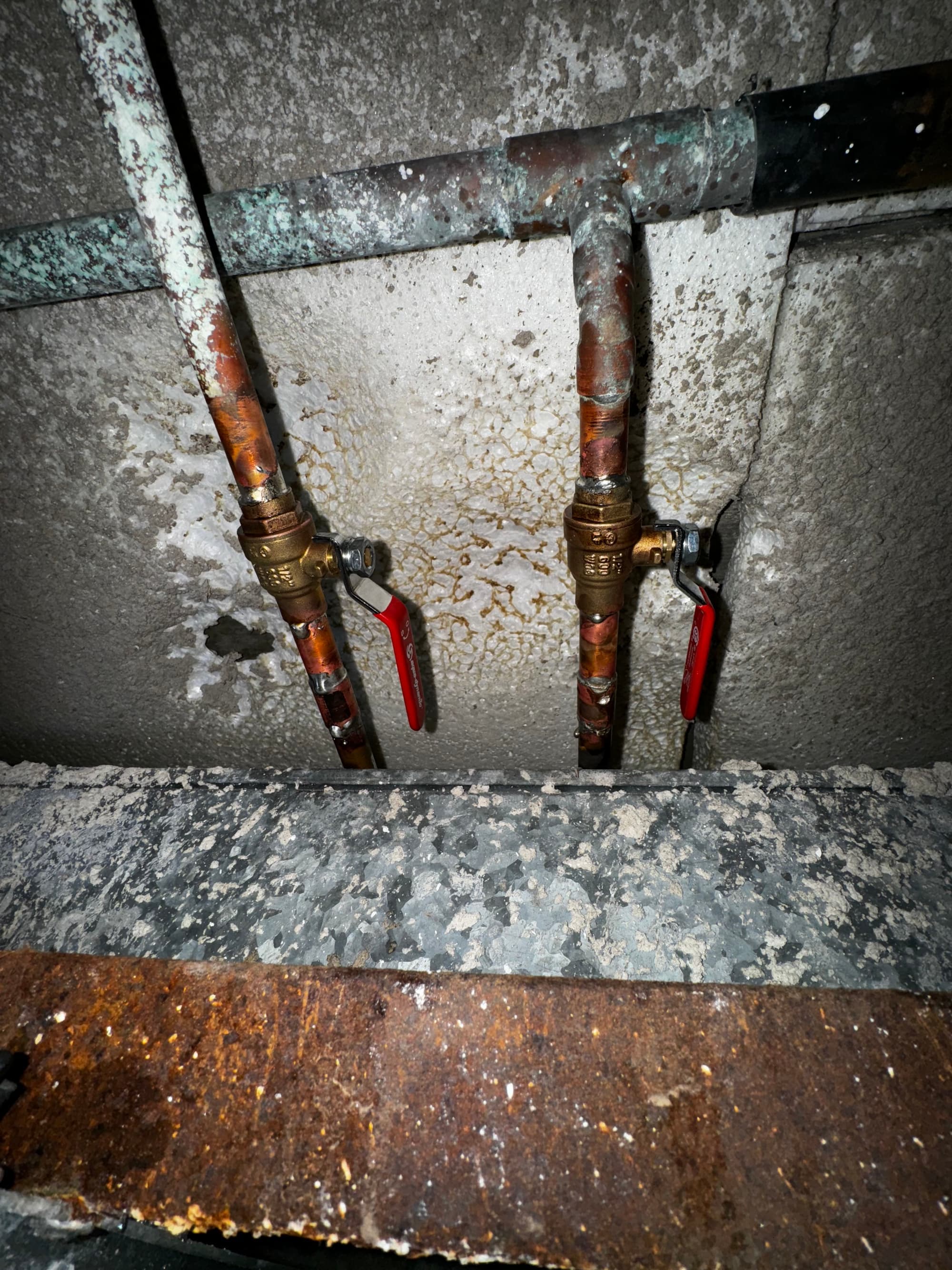
Use the closest shut-off valve first. Most fixtures have their own valve:
- Toilets: a small valve on the wall or floor behind the toilet
- Sinks: two valves in the cabinet underneath, one for hot and one for cold
- Water heaters: a valve on the cold water pipe at the top of the tank
- Washing machines: valves on the hot and cold lines behind the machine
If you can’t find the source, or the leak is in a pipe, shut off the main valve. In most Toronto homes, the City notes that it’s on the foundation wall where the water pipe enters the home, just before the water meter, usually in the basement.
- A round wheel handle closes by turning it clockwise until it stops.
- A lever handle is closed when it sits crosswise to the pipe, at a right angle.
Once the main is off, open a cold tap on the lowest floor to drain the water still sitting in the pipes.
If the main valve won’t turn or won’t fully close, don’t force it with a wrench, since old valves can break. The City of Toronto can shut off the water at the property line if your valve doesn’t work. Requests are made by calling 311, someone must be home, and a fee applies, so check the City’s current details.
Step 2: Make It Safe
Water and electricity are a dangerous mix.
- If water is near outlets, power bars, appliances or the electrical panel, stay out of the area. Only switch off breakers if you can reach the panel while standing somewhere dry. If you can’t, contact your electricity utility.
- Unplug small electronics only if they’re in a dry spot.
- If you smell gas, leave the house right away. Don’t flip light switches or use your phone inside. Call your gas utility’s emergency line or 911 once you’re outside.
- If sewage is backing up, keep children and pets away. Wastewater can carry bacteria, so wear gloves and boots if you must go near it.
Step 3: Limit the Damage
- Move furniture, electronics, rugs and boxes away from the water.
- Mop up, use towels, or run a wet/dry vacuum on standing water.
- Put buckets under active drips from the ceiling. If a ceiling is sagging with water, keep clear of it.
- Open windows or run fans to start drying if it’s safe to do so.
- Take photos and video of the damage before you clean up. Your insurer will likely ask for them.
What to Do in Common Emergencies
Burst or Leaking Pipe
Shut off the main valve, drain the lines, and wrap a towel or rag around the leak to slow the spray. A temporary repair clamp or tape can help with a small pinhole, but treat it only as a stopgap until a plumber repairs the pipe properly. In winter, a burst pipe may be a sign that other pipes are frozen too.
Overflowing Toilet
Stop flushing. Close the valve behind the toilet. If water is still rising, take off the tank lid and push the flapper at the bottom of the tank down to stop more water coming in. Don’t flush again until the clog is cleared.
Leaking Water Heater
Close the cold water valve at the top of the tank. For an electric heater, switch off its breaker. For a gas heater, you can turn the control knob to the off or pilot setting as shown on the label. Don’t touch or disconnect the gas line yourself. Work on the gas supply, burner or venting needs a licensed gas technician. Book a water heater repair to find out whether the tank can be fixed or needs replacing.
Sewage or Drain Backup
If water comes up through a basement floor drain, or several drains back up at once, the problem is usually in the main drain or sewer line. Stop using water anywhere in the house, including toilets, sinks, showers, the dishwasher and the washing machine, until it’s cleared. The City asks residents to report basement flooding through 311.
No Water at All
Check whether neighbours have water. If they don’t, it could be a City water main issue, so call 311. If it’s only your home and it’s very cold out, a frozen pipe is a likely cause.
What to Tell the Plumber When You Call
Having this ready speeds things up:
- What happened, where, and roughly when it started
- Whether you’ve shut off the water, and at which valve
- Whether there’s water near electrical equipment
- The age and type of the fixture or water heater, if you know it
- Your address and the best way into the house
Be Ready Before It Happens
The best time to prepare is on a calm day:
- Find your main shut-off valve, make sure everyone in the home knows where it is, and test it once a year.
- Label the valves under sinks and behind toilets.
- Keep a flashlight, towels, a bucket and gloves somewhere easy to reach.
- Save an emergency plumber’s number in your phone.
Need a Plumber?
For burst pipes, floods, backups and other urgent problems, call Northlife Plumbing at (437) 246-5507. Our emergency plumbers are available 24/7 across North York, Toronto and the GTA, and you approve the price before any work begins.