
Most Toronto winters bring more slush than deep freeze, but every year a few cold snaps put household plumbing to the test. Climate averages for Toronto show January nights typically dropping to around -9°C, and arctic air can push temperatures well below that for days at a time. That’s when pipes in outside walls, crawl spaces and garages are most likely to freeze.
A frozen pipe is more than an inconvenience. Water expands as it turns to ice, pressure builds inside the pipe, and a split or burst can follow. Often the damage only shows up when things thaw and water starts pouring out. The good news is that most frozen pipes can be prevented with a few simple habits.
Why Pipes Freeze in Toronto Homes
Pipes rarely freeze in the middle of a warm house. Trouble usually starts where cold air meets plumbing:
- Pipes running along or inside exterior walls, especially in older homes with little insulation
- Unheated spaces such as garages, crawl spaces, attics and cold cellars
- Kitchen and bathroom sinks on outside walls, where closed cabinet doors trap the cold
- The water service pipe and water meter near the basement foundation wall
- Outdoor taps and the short section of pipe that feeds them
Drafts make this worse. A small gap around a vent, cable line or basement window can blow freezing air straight onto a pipe.
Watch the Forecast: The -10°C Trigger
The City of Toronto urges residents to take precautions when forecast overnight temperatures drop below -10°C. That’s an easy rule of thumb to remember. When you see a cold snap coming, run through the steps below before you go to bed, not after you wake up to dry taps.
8 Ways to Prevent Frozen Pipes
- Keep the heat on where the pipes are. The City recommends keeping any area with indoor water pipes above 8°C, especially near the water meter. Avoid closing off a cold basement room or storage area that has plumbing running through it.
- Disconnect hoses and drain outdoor taps. Unscrew garden hoses, close the indoor valve that feeds each outdoor tap, then open the outdoor tap so the remaining water can drain. Ideally, do this in the fall before the first hard frost.
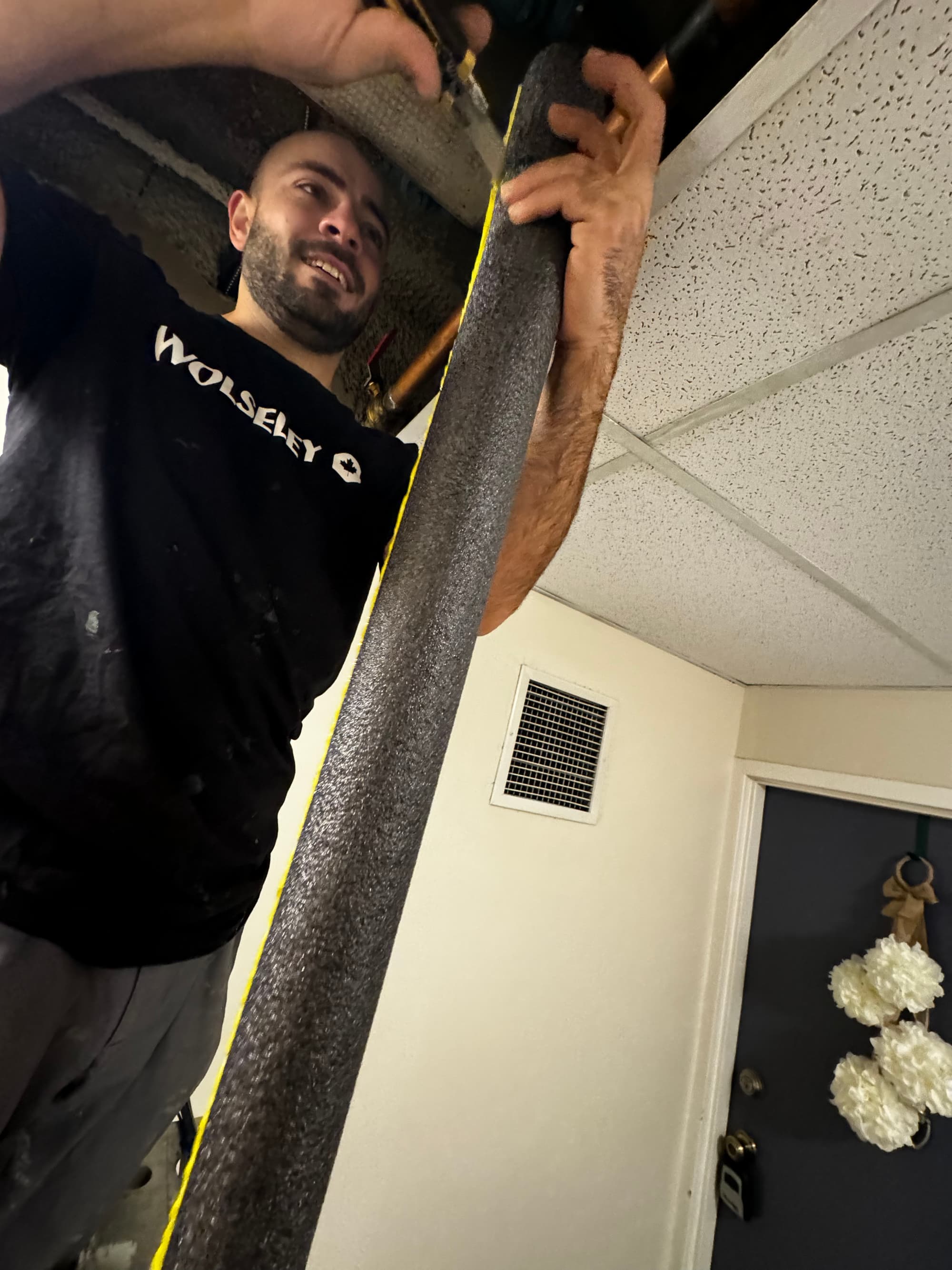
- Insulate exposed pipes. Foam pipe sleeves are easy to find at hardware stores and simple to fit on pipes you can reach in basements, garages and crawl spaces.
- Seal drafts. Use caulking or spray foam to close gaps where pipes, wires or vents pass through exterior walls.
- Open cabinet doors. On very cold nights, open kitchen, bathroom and laundry cabinets so warm room air can reach the pipes inside.
- Let a pencil-thin stream run. If a pipe has frozen before or runs along an outside wall, leave the tap open with a thin, steady stream. Moving water is much harder to freeze. The City’s advice is to keep it running day and night until temperatures return to normal for the season, and to make sure the drain is clear so the sink can’t overflow.
- Know where your main shut-off valve is. In most Toronto homes it’s on the basement foundation wall where the water pipe enters, just before the water meter. Try turning it once a year so you know it works when you need it.
- Plan ahead for time away. If you’re travelling over the holidays, leave the heat on and ask someone to check the house regularly. For longer trips, ask a plumber whether shutting off and draining your water lines makes sense for your home.
Signs a Pipe Has Frozen
- A tap gives only a trickle, or nothing at all, while other taps work normally
- Frost on a visible pipe, or a pipe that feels unusually cold to the touch
- A toilet that doesn’t refill after flushing
- A visible bulge or crack on an exposed section of pipe
If you notice any of these on a cold morning, act quickly.
How to Thaw a Frozen Pipe Safely
If you catch it early and the pipe isn’t cracked, you can often thaw it yourself:
- Open the tap the frozen pipe feeds. This gives melting water somewhere to go. The City also suggests opening a basement tap, ideally the cold tap in the laundry room.
- Apply gentle heat. Start closest to the tap and work back toward the frozen section. A hair dryer, an electric heating pad, a space heater kept at a safe distance, or warm towels wrapped around the pipe can all help.
- Be patient. According to the City, thawing can take anywhere from one to six hours.
- Check for leaks. Once water flows normally, look along the full length of the pipe for drips or damp spots.
Never use a torch, open flame, propane or kerosene heater, or charcoal stove to thaw a pipe, and never leave a heater or hair dryer running unattended. Keep electrical devices away from any standing water.
If you can’t find the frozen section, can’t reach it, or it’s inside a finished wall, stop and call a licensed plumber. If nothing seems to work, the City of Toronto also takes reports through 311 and can investigate whether the problem is on its side of the property line.
What to Do If a Pipe Bursts
A burst pipe can release a lot of water quickly, so move fast:
- Turn off the main shut-off valve.
- Stay clear of outlets, appliances and the electrical panel if water is nearby.
- Open the cold taps on the lowest floor to drain water left in the lines.
- Move valuables out of the way, take photos for your insurer, and start soaking up water.
- Call an emergency plumber to repair the damaged section.
A small crack can also leak slowly inside a wall for weeks after a freeze. Watch for damp drywall, stains, or a water bill that seems higher than usual, and consider professional leak detection if something doesn’t add up. If the same pipe freezes every winter, a plumber can look at rerouting or replacing that section so it stays inside the warm part of your home.
Need a Plumber?
If your pipes keep freezing or you’re dealing with a burst pipe, call Northlife Plumbing at (437) 246-5507. We offer 24/7 emergency service across North York, Toronto and the GTA (see our service areas), with free quotes and upfront pricing you approve before any work begins.